Last dispatch I mentioned a planet generating underneath the flight model. This one’s about how that works, what it looks like right now, and why we didn’t just paint a landscape on a sphere and call it done.
The problem with painted worlds
Most games build terrain by hand. An artist sculpts a heightmap, paints textures on it, places rocks and trees, ships it. It looks great. It’s also frozen — what you see is all there is, and making more of it means more artist hours.
We can’t do that. ARCX needs Earth-scale planets. Silikron alone is 6,000 km radius. You’re supposed to fly across an active zone in 2–3 minutes at cruise speed and feel small the entire time. Hand-painting that isn’t a workflow problem, it’s a physics problem — there’s just too much ground.
So we built StruxTerrain. Custom system. Not an asset store plugin, not middleware. A GPU-driven procedural planet generator that builds terrain from geological first principles.
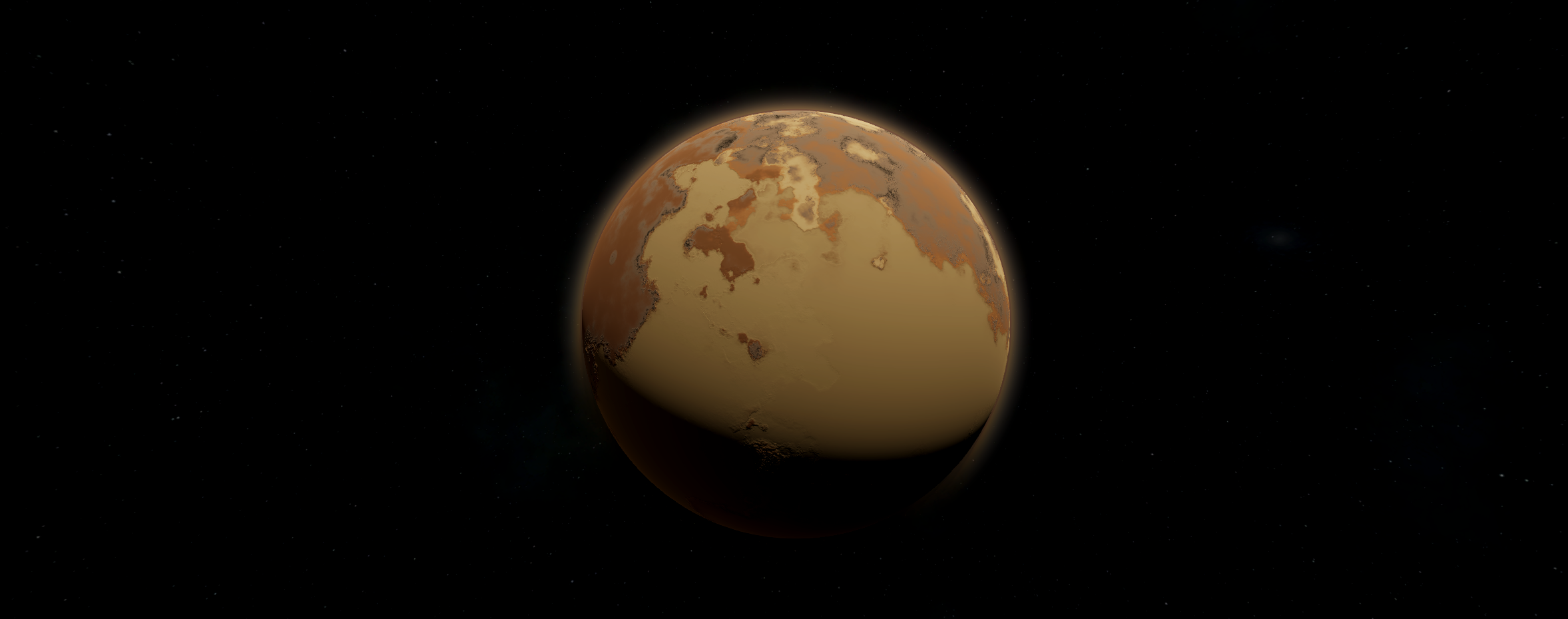
Geology is cause, terrain is effect
That line is the design philosophy for the whole system, and it’s the thing that makes StruxTerrain different from most procedural terrain you’ve seen in games.
A lot of procedural generators work by layering noise — mathematical randomness stacked on more randomness until it kind of looks like ground. The results are fine from a distance but they don’t hold up when you’re flying 40 metres above the deck at combat speed. The shapes don’t make geological sense. There’s no reason for a ridge to be where it is. No reason for a basin to sit next to a mountain range. It’s noise pretending to be a planet.
StruxTerrain doesn’t start with noise. It starts with geology.
Step one: tectonic plates. The generator divides the planet into roughly seven tectonic plates — some continental, some oceanic. Continental plates sit higher. Oceanic plates sit lower. That elevation difference is where coastlines, continental shelves, and ocean basins come from. The boundaries between plates aren’t straight lines — they’re distorted across multiple scales so you get bays, peninsulas, islands, all the messy organic shapes a real planet has.
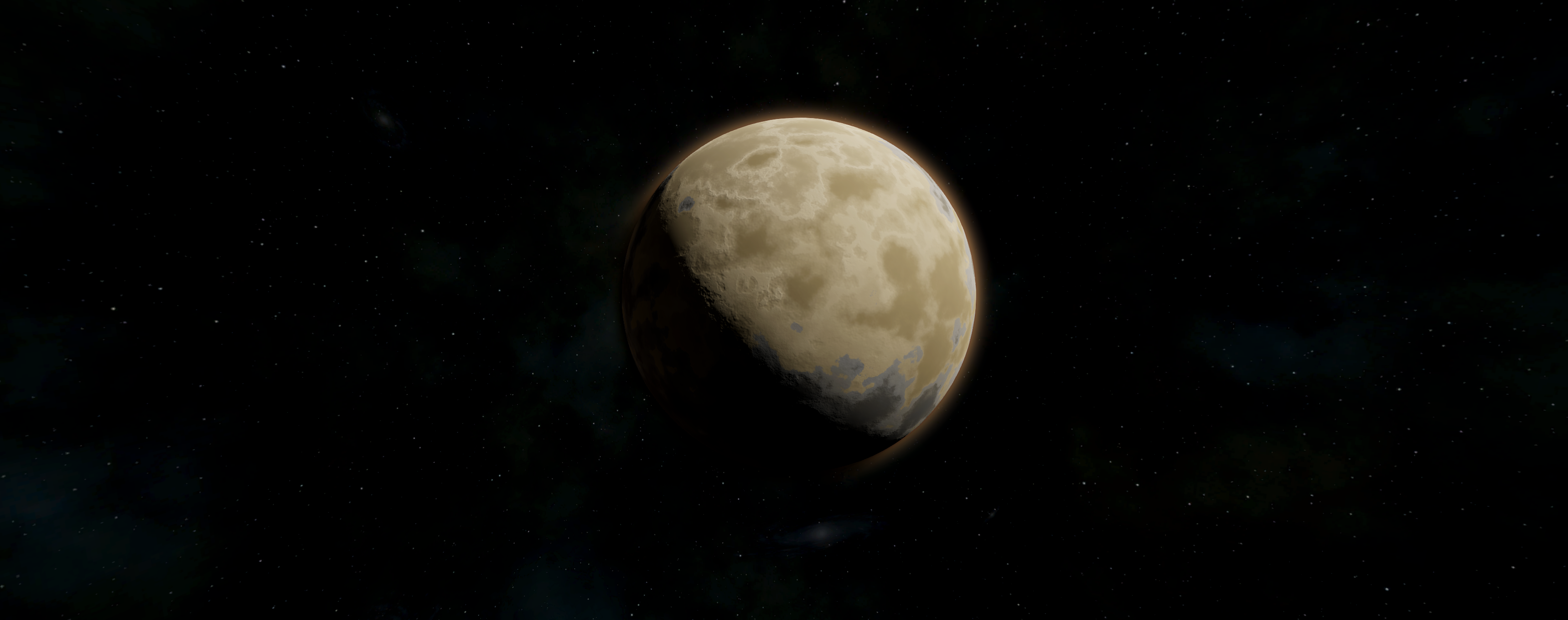
Step two: mountains. Where plates collide, mountains form. The system classifies every plate boundary — continental hitting continental produces tall fold ranges. Continental hitting oceanic gives you volcanic arcs. Oceanic hitting oceanic creates mid-ocean ridges. Each collision pair gets its own width, height, asymmetry, and erosion profile. No two mountain ranges on the planet look the same, because no two plate boundaries are the same.
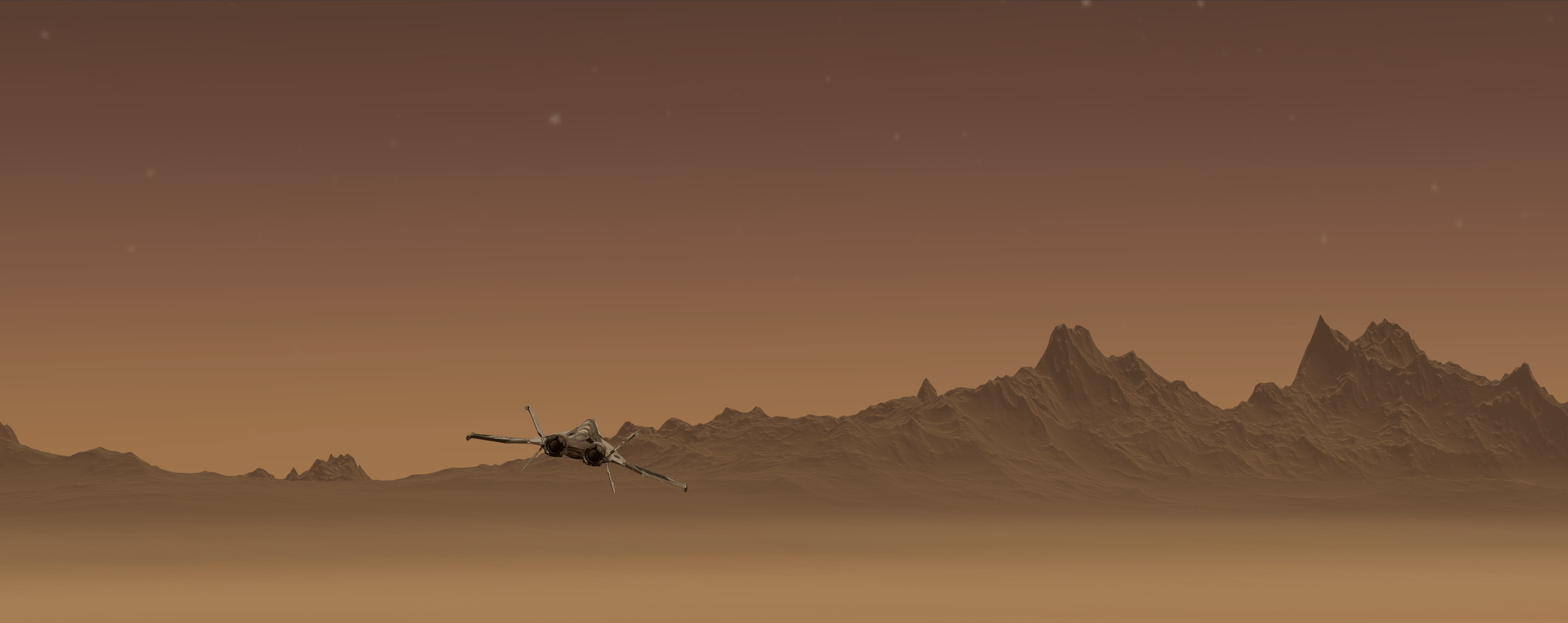
Step three: erosion. Once the raw mountains exist, an erosion filter carves them into ridges and gullies. The peaks get sharper. The valleys get deeper. The shapes start looking like something weather actually touched.
Every meter of height on the planet has a geological reason for being there. That’s the contract.
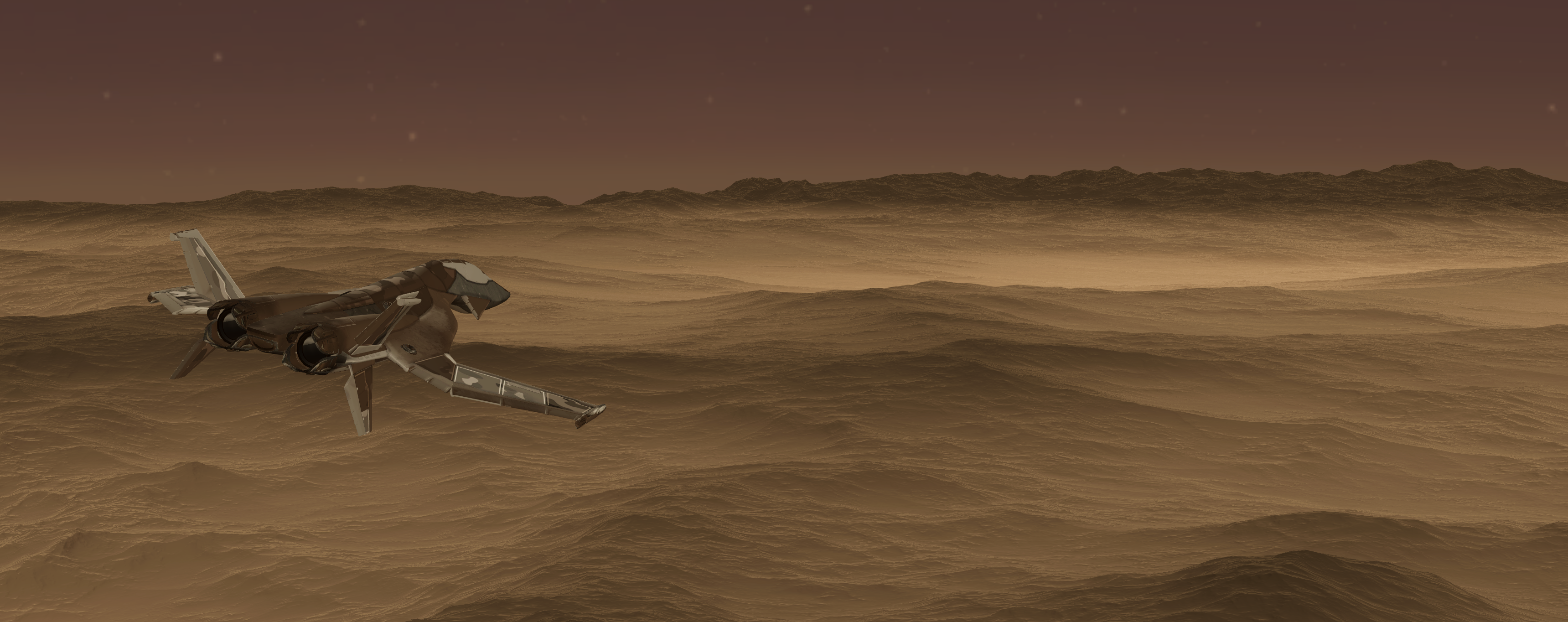
Silikron — the first planet
The first world StruxTerrain is building is Silikron. Desert world. Drained ocean planet — the water’s been gone for a long time. What’s left is exposed ocean floor stretching to the horizon, bare mid-ocean ridges standing up as landmarks, and canyon systems carved by rivers that don’t exist anymore. Yellow, orange, brown. Dust and rock. The sun is relentless. At dawn and dusk the sky burns orange.
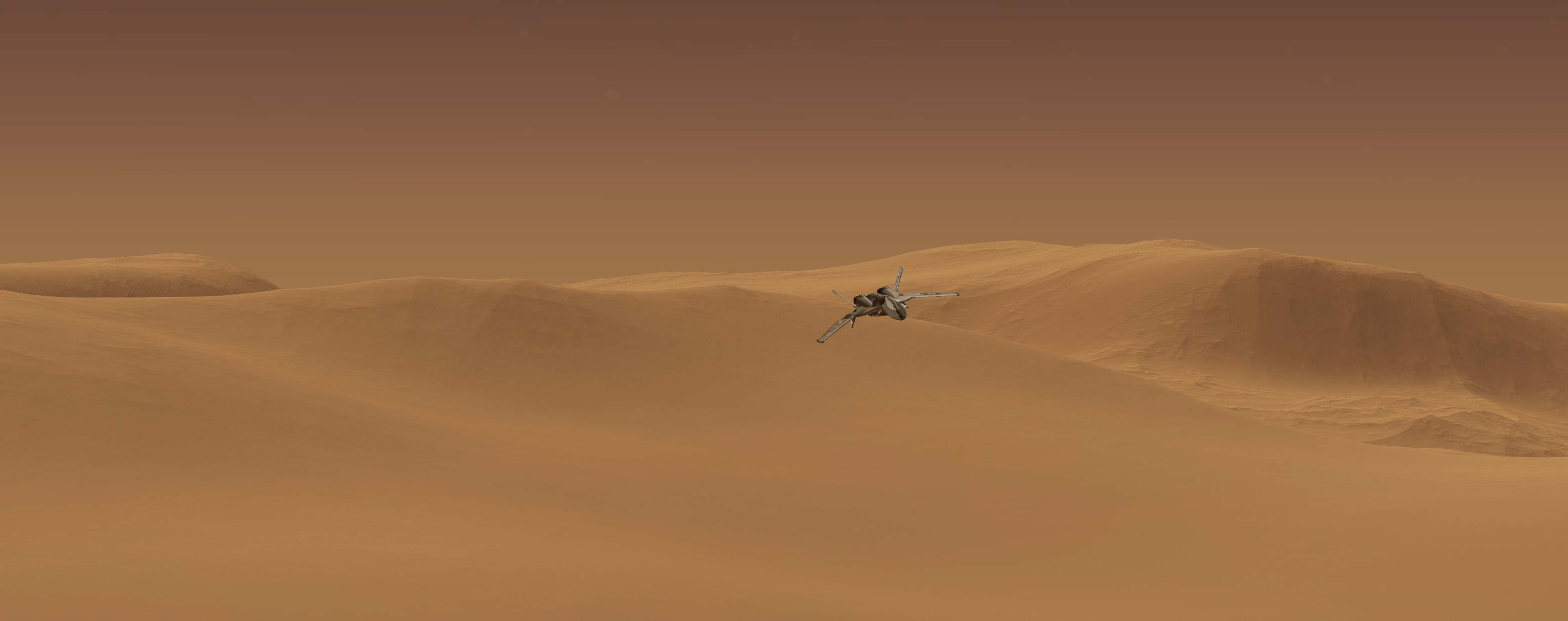
It’s not empty though. Beneath the surface, Silikron is alive — fungal colonies, bioluminescent networks, entire ecosystems thriving in underground cavern systems. The contrast with the surface is extreme. You fly over rust-coloured nothing for minutes and then drop into a canyon and the walls are glowing.
And then there are the Nil Crystals. Purple to deep violet, translucent, pulsing with a slow rhythm like a heartbeat. They’re the most valuable thing on the planet and probably the most dangerous. You can see them from altitude — they distort the rock and metal around them, and they draw the eye even from a distance. Pilots orient by them. Factions fight over them. The whole economy of the war runs through them.
The Hashare run the surface. Descended from deep-sea filter feeders that survived the oceans drying up, adapted to feed on Nil Crystals, wearing crystalline exoskeletons that catch the light like dark bronze. Six legs, compound eyes, flight-capable. Colony-based, caste-organised — not all of them are hostile. Workers behave differently from Enforcers. The Imperial Core manages them like livestock, culling to control territory but never wiping them out, because they accelerate Nil Crystal formation.
Silikron is designed around the flight model. Canyon runs at high speed. Low-altitude evasion behind rock formations. Wide-open basin engagements at altitude. The terrain isn’t scenery — it’s part of the fight.
What’s actually working right now
Honest state, same as last time.
Working: Continental and oceanic elevation. Mountain chains forming at plate boundaries with per-pair variety. Erosion carving ridges and gullies into the raw shapes. The full LOD system — the planet streams in around you as you fly, from orbit to surface, no loading screens. Deterministic seeding — same integer, same planet, every time. Horizon culling so the GPU isn’t rendering terrain behind the curve of the planet.
Not working yet: Physics colliders. Right now the terrain generates and the ship flies, but they exist in complete isolation. The ship can’t hit the ground because the ground doesn’t have collision yet. That’s a vertical-slice blocker and it’s next on the list. Rift valleys, volcanoes, surface detail like dunes and scree — those are all designed but not generating. Nil Crystal rendering is described but not built. Atmosphere and skybox are Silikron-specific work that hasn’t started.
What we’re doing right now: Fixing the mountains. Recent work has been about getting erosion coordinate systems right, eliminating seam artifacts where cube faces meet, and tuning mountain quality across the whole planet. The focus is making what exists look correct before stacking new geological layers on top of it.
The critical gap is terrain-to-flight integration. StruxTerrain builds a planet. The flight model flies a ship. Connecting them through physics colliders is the bridge, and it’s the thing that turns “tech demo” into “game.” That’s where we’re headed.
What’s next
Colliders first. Then the vertical slice has a planet you can actually crash into, and canyon flying becomes real geometry instead of a design doc. After that: rift valleys, volcanoes, surface detail — the layers that turn a geological simulation into a place that feels specific and lived-in.
More on Silikron as the layers land. Every dispatch will show the real state.
— Batuhan “Babbus” Yıldız · STRUX Games