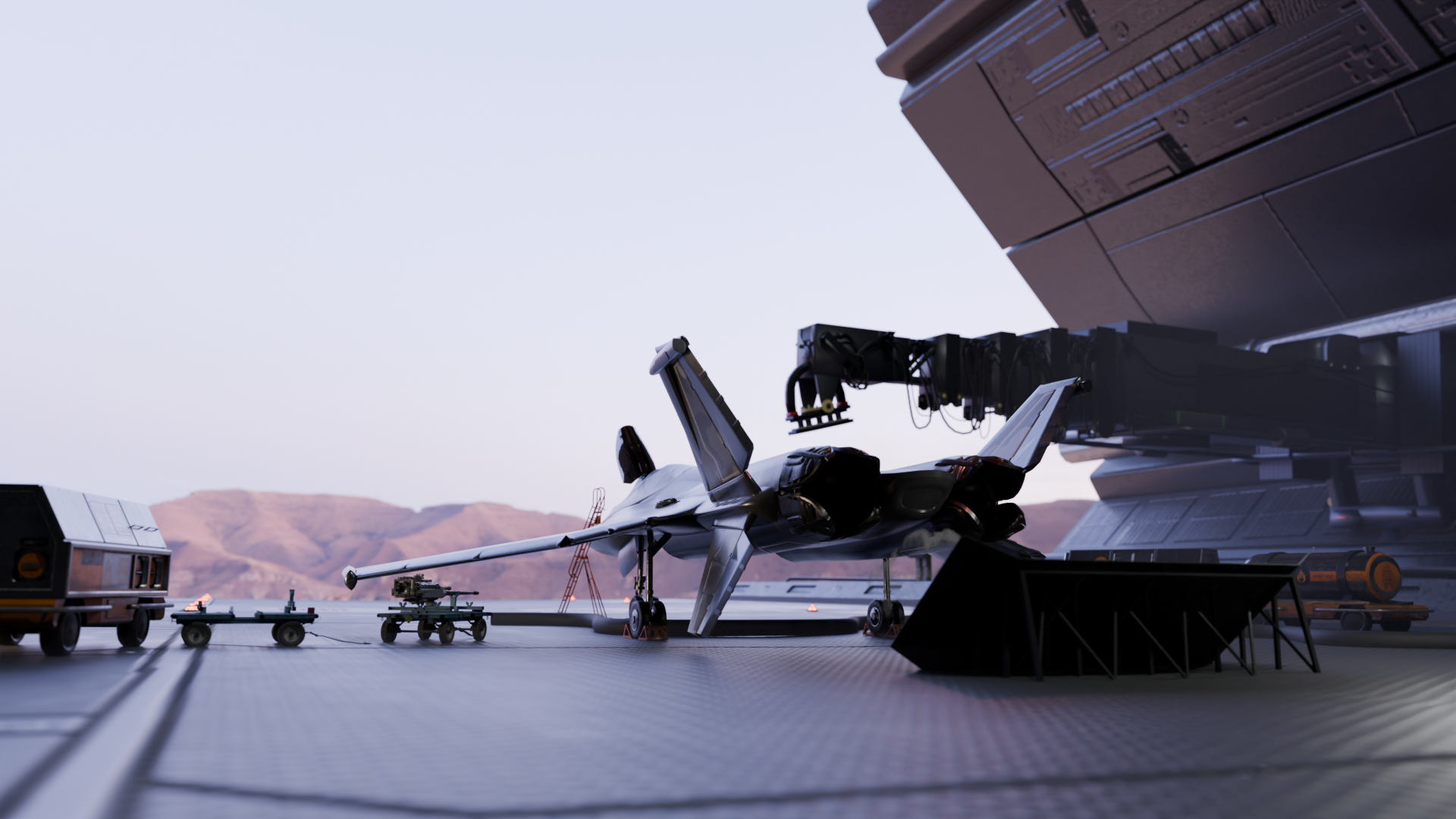
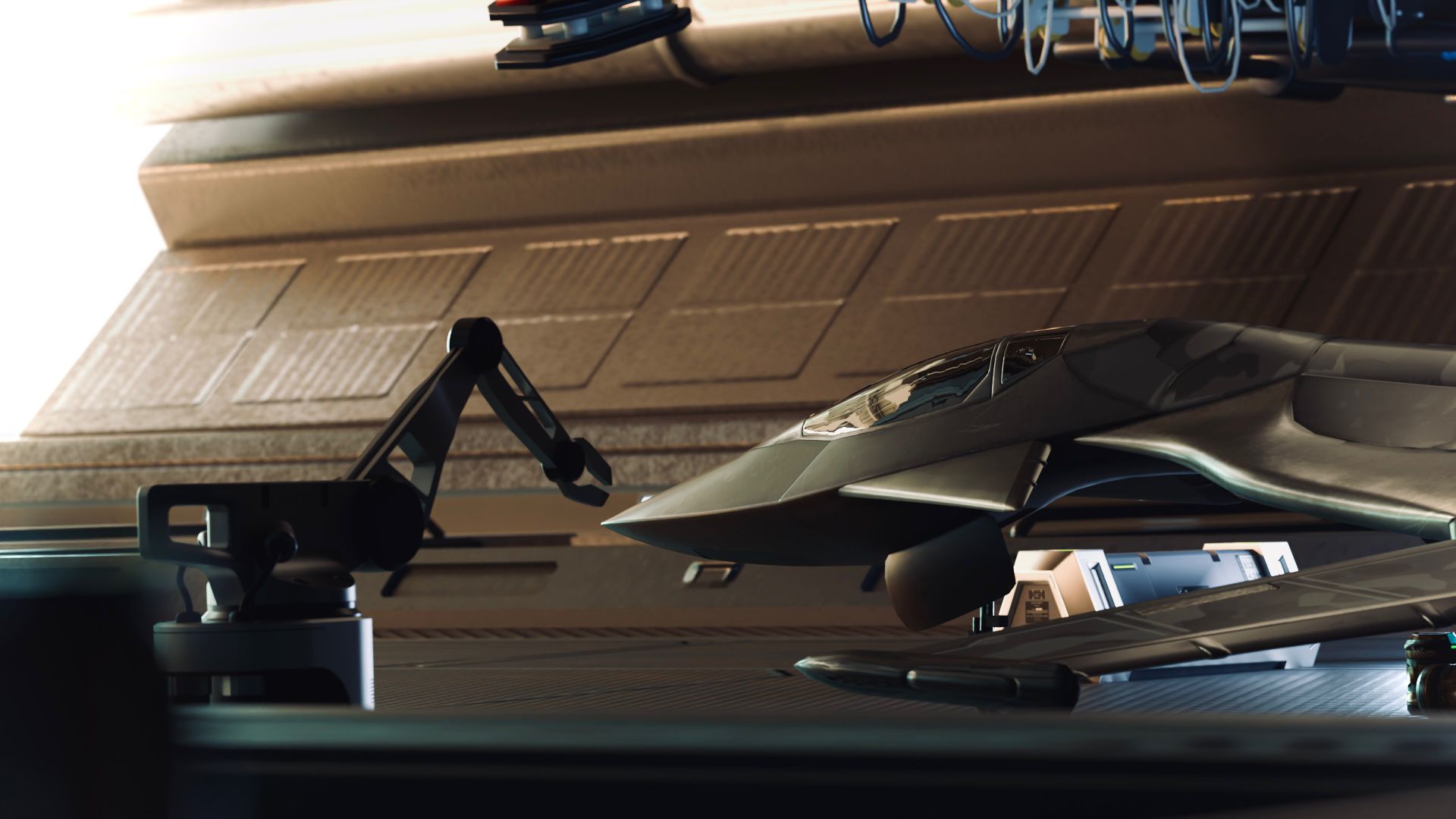
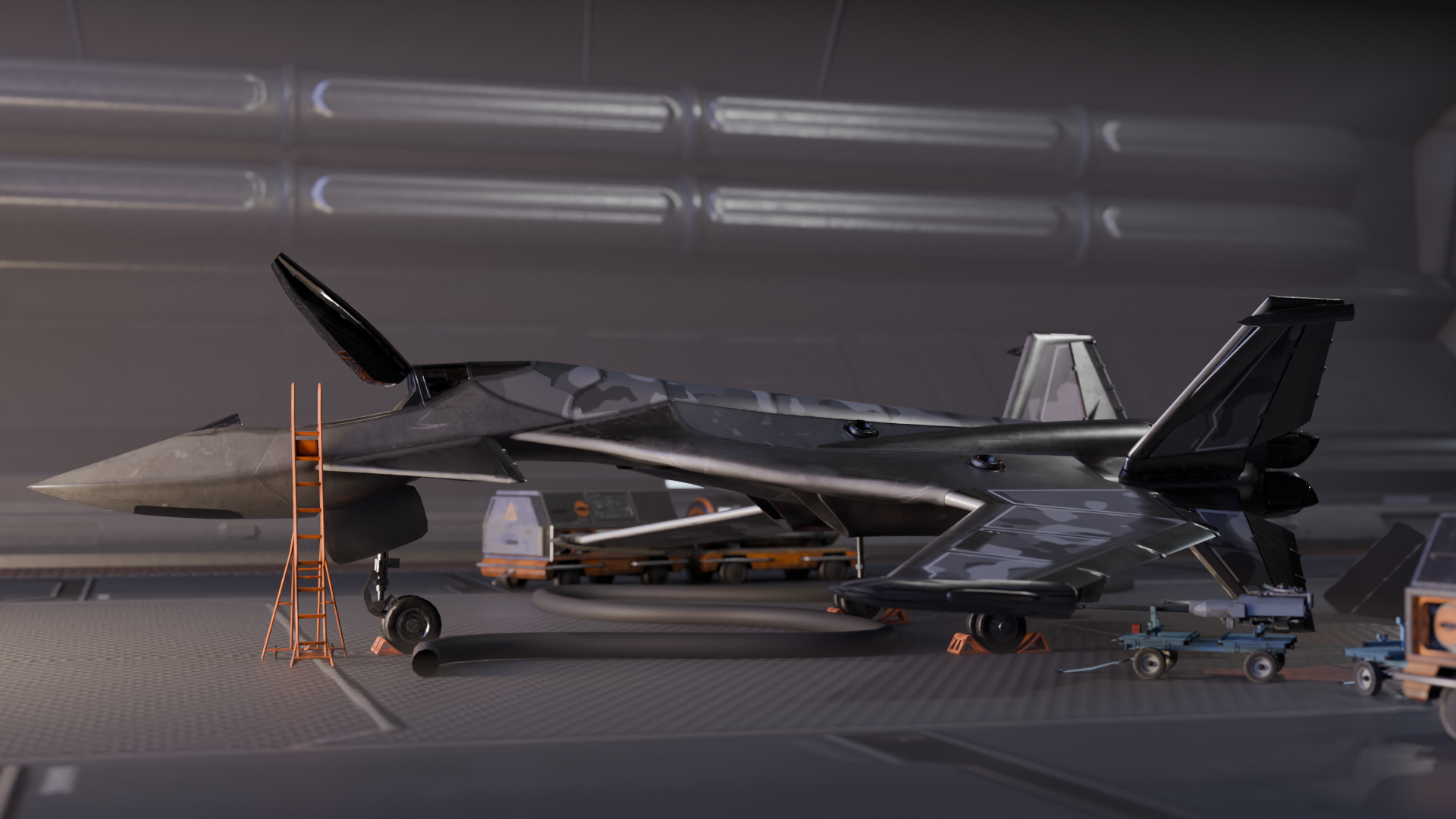
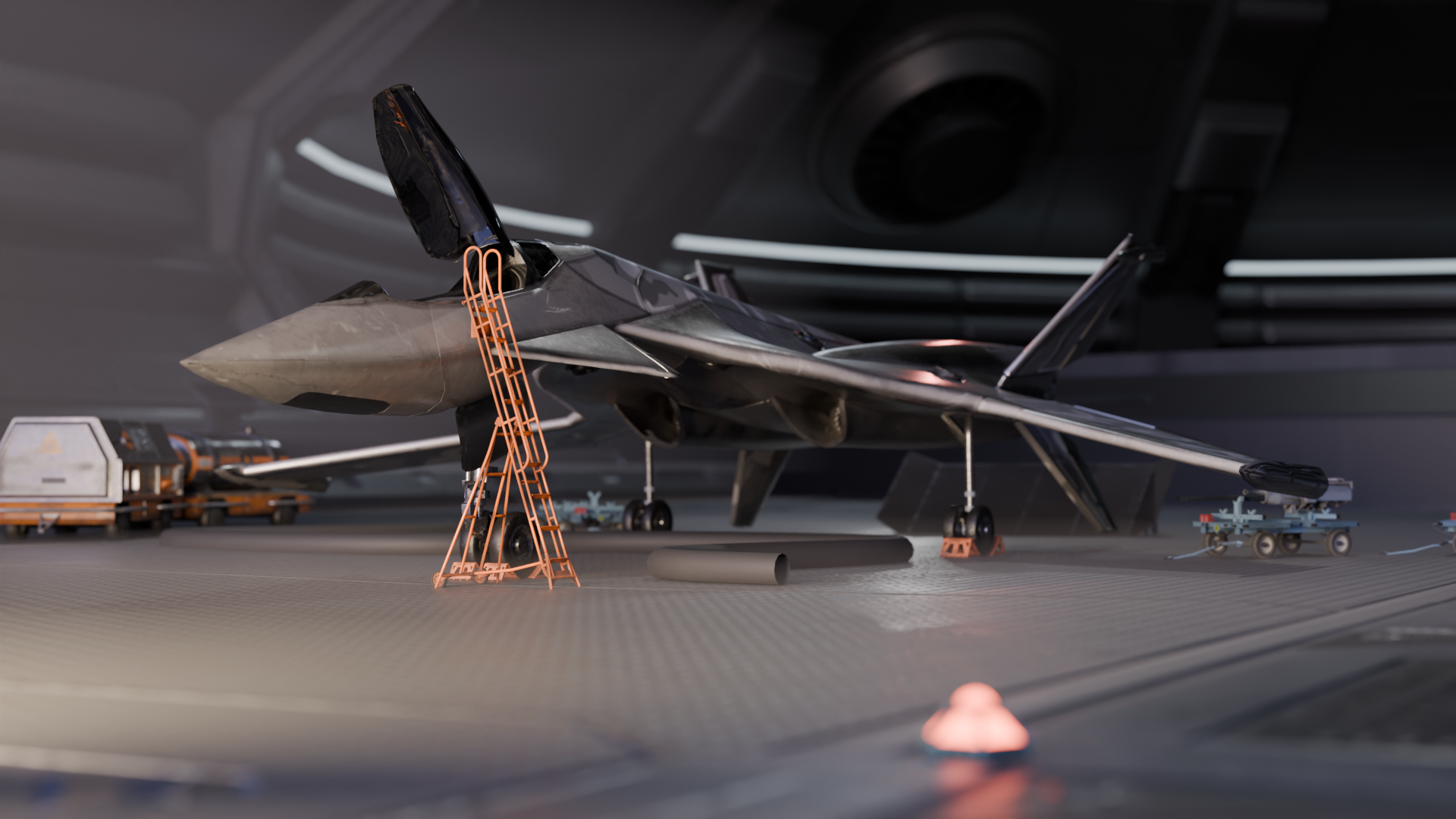
Light. Fast. Doesn't forgive.
Specifications
Field log
First sortie on the Nova Vex. Departing Echo Citadel at 0340 local. Atmospheric conditions: heavy particulate, crosswind advisory active. Standard evaluation run — no combat tasking.
Initial throttle response is immediate. The Vex doesn't ease into speed — it arrives. Full thrust at altitude put the airframe ahead of the projected acceleration curve by a margin that would concern anyone flying formation with it. This is not a ship that waits for wingmen.
Handling at high speed is precise in a way that punishes imprecision. The control surfaces respond to input with zero forgiveness. Drift entry at 340 m/s decoupled the velocity vector cleanly — the nose tracked where I pointed it while the hull carried momentum through a canyon pass that would have killed me in a Breacher. The flight model rewards commitment. Hesitate on the stick and the Vex reads it as indecision.
Stall characteristics are aggressive. Below critical threshold the airframe drops with no warning flutter, no gradual fade. Power-on recovery is fast if the pilot is ready. If the pilot is not ready, recovery is a logistics problem.
Three medium mounts and two small. Not a heavy loadout for the frame size, but the speed changes the math. At the engagement distances this chassis creates, accuracy matters more than volume. The Vex puts the pilot where the shots need to be — what happens after that is a gunnery question.
Nova built this for a specific kind of pilot. Someone who does not want armour because they do not intend to get hit. That is either confidence or a problem and the difference depends on whether the pilot can fly the line this ship draws.
Recommendation: clear for full deployment. Assign to experienced operators only. This airframe does not train pilots. It filters them.
Structural Scan · NV-001